
Last updated August 28, 2026
Free in-home measure and quote - PGT, CGI and CWS impact lines compared on your actual openings, style by style


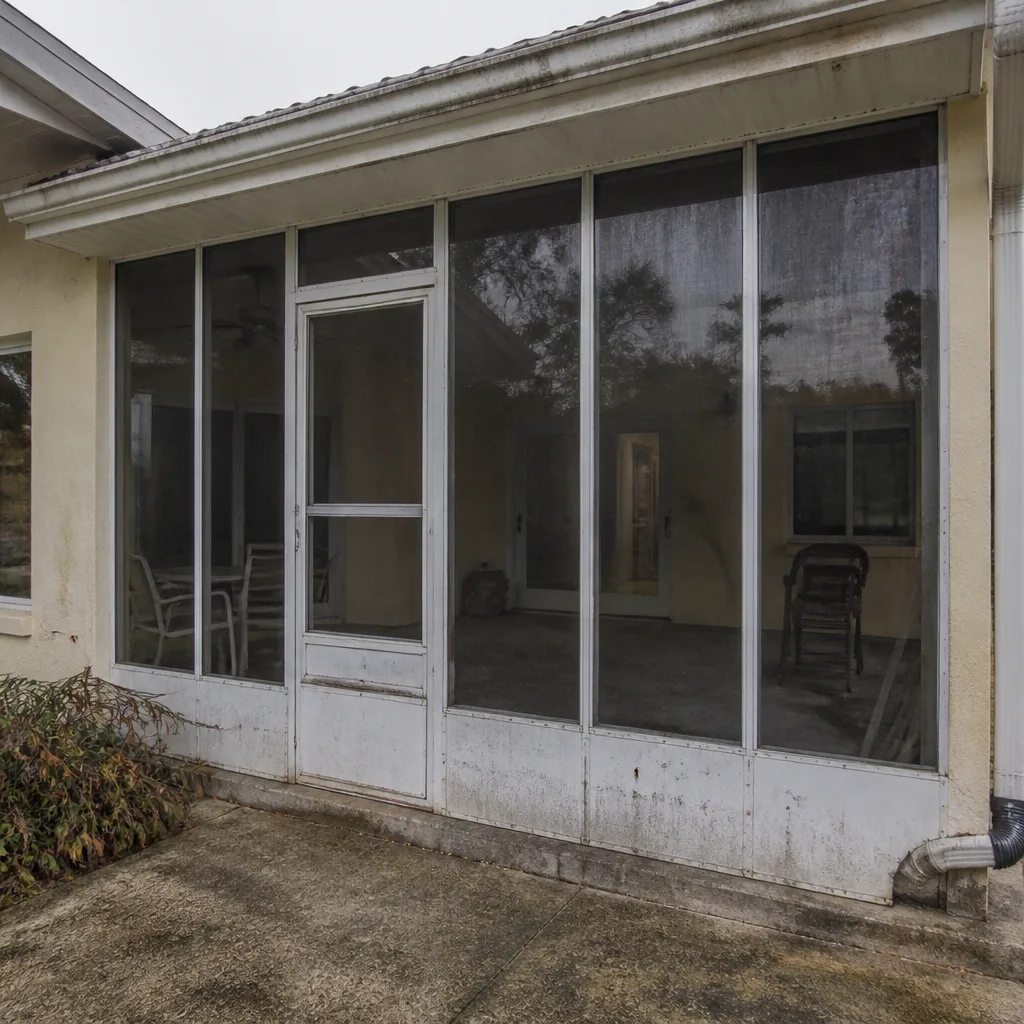 Before
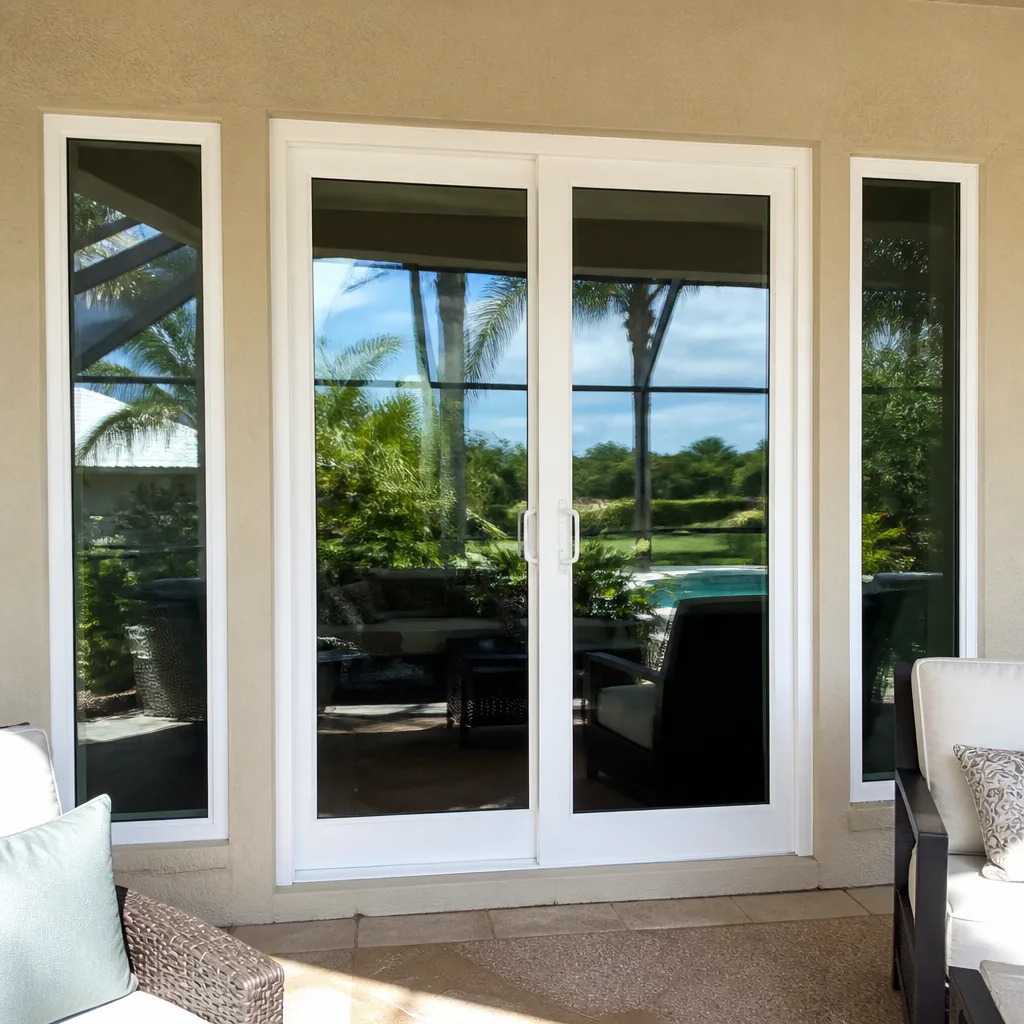 After
After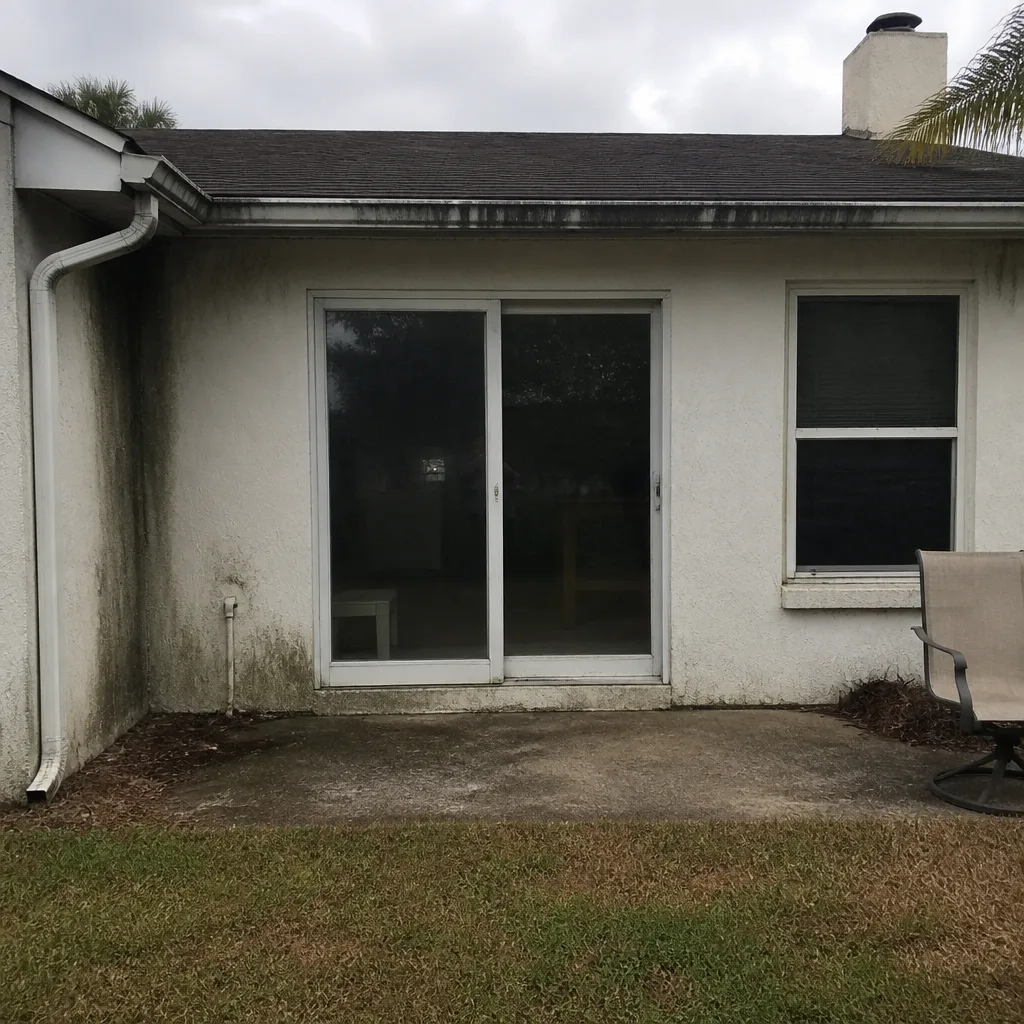 Before
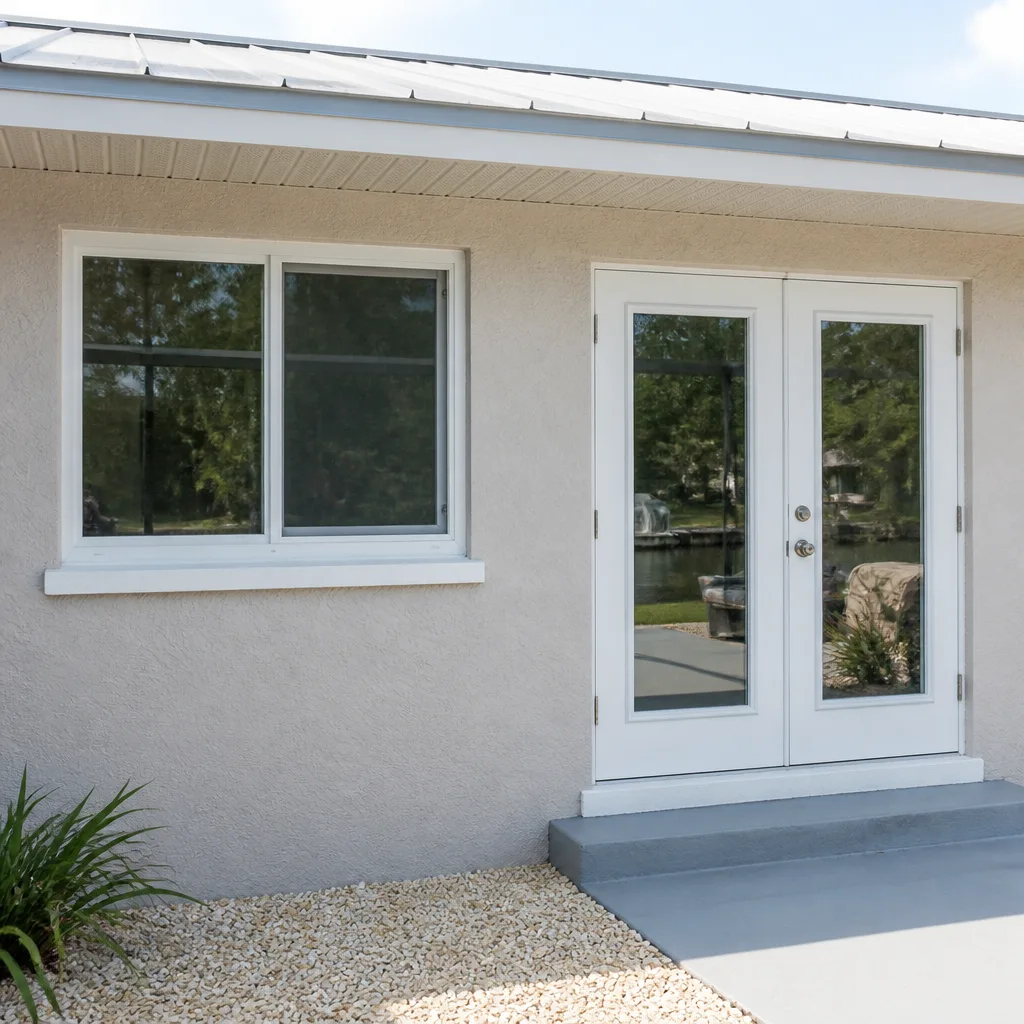 After
After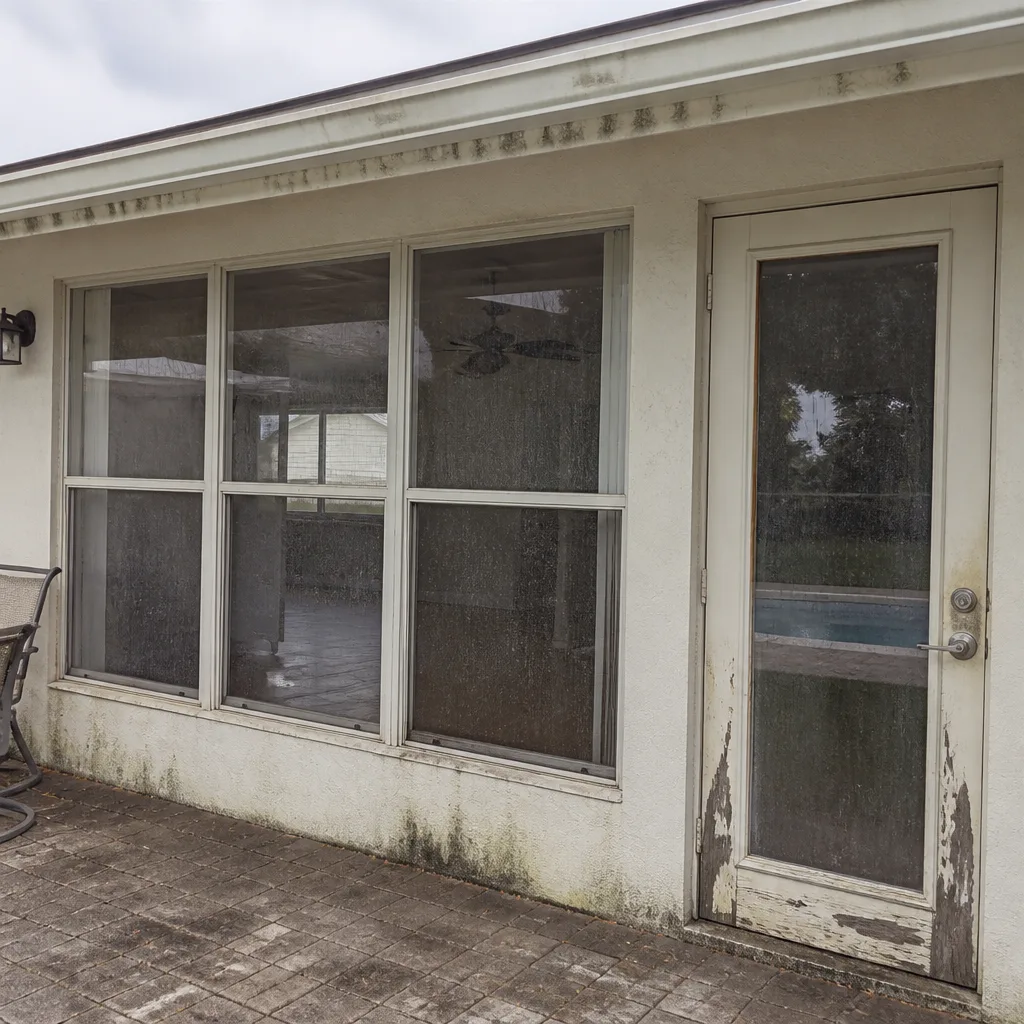 Before
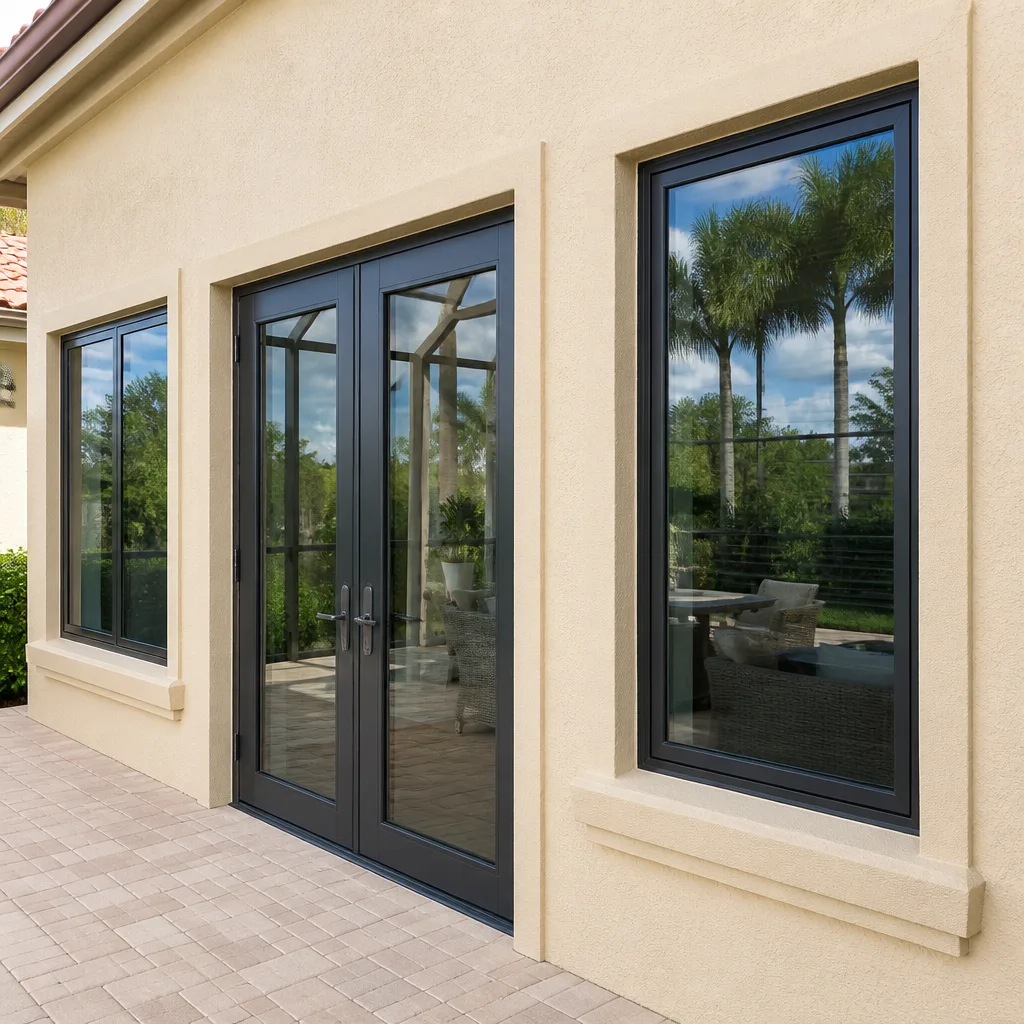 After
AfterWindows & Doors Warning Signs: A Fort Myers Homeowner’s Reference Guide
Most Fort Myers homeowners think a failed window or door announces itself with a dramatic crack, a visible leak, or a shattered pane. In reality, the failure usually begins quietly months or even years earlier: a door that drags against the threshold after a storm, a faint chalky film on aluminum frames, an electric bill that climbs a little higher every July. These signals get dismissed as normal wear-and-tear in a humid climate. That dismissal is expensive. This guide will teach you how to read your windows and doors the way a diagnostic technician does, so you catch the warning signs while they’re still cheap to address. For a deeper dive, see The Complete Guide to Windows & Doors in Fort Myers. Fort Myers heat, salt air, and hurricane season all accelerate failure here in specific, predictable ways.
Quick Answer
The most common early warning signs of window and door failure in Fort Myers are: condensation or fogging between panes, aluminum frame oxidation or pitting, doors that stick or latch with resistance after a storm, visible daylight around closed doors, and unexplained spikes in your summer electric bill. If you notice any two of these in the same opening, schedule an inspection rather than waiting for visible water intrusion.
Table of Contents
- Fogging Between Panes vs. Surface Condensation: The Most Misdiagnosed Problem in Southwest Florida
- Salt-Air Corrosion on Aluminum Frames: Stages, Appearance, and When It Crosses the Line
- How to Test an Impact Door After a Storm: Threshold, Latch, and Hinge Checks
- Your Fort Myers Electric Bill Is Trying to Tell You Something About Your Windows
- Interior Wall Staining: Window Leaks vs. Roof Leaks vs. Plumbing Leaks
- Impact Rating Integrity: What Compromises It and How to Know
- Common Mistakes to Avoid
- When to Call a Professional
- Frequently Asked Questions
- The Bottom Line
Fogging Between Panes vs. Surface Condensation: The Most Misdiagnosed Problem in Southwest Florida
If you walk through a Fort Myers home on a July morning and notice moisture on the inside of a window, you have one of two completely different situations. The distinction matters because one is normal and the other means the window has failed. Here’s how to tell them apart in about ten seconds.
Surface condensation forms on the room-facing side of the glass. It happens when warm, humid indoor air meets a cold glass surface. In Fort Myers, this is most visible on mornings when the AC has been running hard all night and the outdoor humidity is 90 percent or higher. Run your finger across it. It wipes away. That is surface condensation. It is not a window failure. It is basic physics, and it is more common in older Fort Myers homes where single-pane windows or standard double-pane glass lets cold transfer through more easily. Improving ventilation or running the AC fan a bit longer typically addresses it. Sometimes it simply means the window is doing its job and the indoor humidity is genuinely high.
Fogging between the panes is an entirely different animal. If you see condensation, haze, or stubborn film that does not wipe away because it is trapped between the two pieces of glass, the hermetic seal has failed. That seal is what keeps insulating gas (usually argon) inside the window and moisture out. Once the seal fails, the gas escapes, humid air enters the space between the panes, and the window loses most or all of its insulating value. No amount of wiping, defogging spray, or wishful thinking restores it. The fix is replacement of the glass unit or, in many cases, the full sash.
In our experience, this is the single most commonly misdiagnosed window problem we see across Fort Myers. Homeowners sometimes live with failed seals for years, assuming it’s “just humidity” or that the hazy glass is a cosmetic nuisance. It is not. A failed seal in an impact-rated window also raises a deeper concern: if the seal has failed, you have to ask what else in that window has degraded, especially in a coastal climate where salt and heat work on every component. When we evaluate a window with inter-pane fogging, we always check the frame, the hardware, and the lamination before recommending a repair versus a full replacement.
Quick Test
- Wipe the moisture with your finger or a cloth.
- If it disappears and the glass is clear, it’s surface condensation. Not a failure.
- If the haze or moisture is still there after wiping, it’s between the panes. The seal is failed. The window needs a glass unit replacement or a full replacement.
- If you’re not sure which side the moisture is on, use a flashlight at a sharp angle. Inter-pane fog will show a visible air gap between the condensate and the reflective surface.
This matters for a dollar-and-cents reason too. A window with a failed seal no longer insulates. In a Fort Myers summer, that means more heat gain into the house, a longer AC runtime, and a higher electric bill. The window has quietly become a hole in your building envelope. Our window replacement guide for Fort Myers homeowners breaks down what replacement actually involves when a seal failure is confirmed.
Salt-Air Corrosion on Aluminum Frames: Stages, Appearance, and When It Crosses the Line
Fort Myers sits on the Gulf Coast, and anywhere within several miles of salt water, the air carries microscopic salt particles. Aluminum window and door frames are durable, but salt air attacks them relentlessly over time. The corrosion progresses through recognizable stages, and understanding which stage you’re at tells you whether you’re looking at maintenance or replacement.
Stage 1: White Oxidation. This is the earliest sign. The anodized or painted finish on the aluminum takes on a chalky, whitish film, often starting at joints, corners, and screw heads. You can rub it with a finger and a fine white powder comes off. At this stage, the finish is breaking down but the structural aluminum underneath is still protected. Cleaning with mild soap and water followed by a protective wax can slow it. This is maintenance territory.
Stage 2: Flaking and Blistering. The finish begins to lift away from the aluminum in small patches, typically around the bottom rail of windows and the threshold of doors where salt-laden rainwater pools. You may see tiny bubbles under the paint or anodizing. Now the structural metal is exposed in spots. Cosmetic touch-ups are possible, but every month of exposure accelerates what comes next.
Stage 3: Pitting. This is the critical transition point. The aluminum develops tiny, deep craters: not surface discoloration, but actual loss of metal. Pitting typically appears first on horizontal surfaces where water sits: the bottom track of sliding doors, the lower frame of fixed windows, and hardware mounting points. Once pitting is present, the frame’s structural integrity is compromised in that area, the finish cannot be restored economically, and the window or door is in replacement territory. Pitting that forms around fastener points is especially serious because it means the hardware holding the panel in place is losing its anchor.
Stage 4: Through-Corrosion and Fracture. At this stage, the aluminum has corroded entirely through at points, often near the weep holes or corners. The frame may crack under normal operational stress. An impact window or door in this condition offers essentially no rated protection, because the frame is the anchor system for the impact glass. If a panel dislodges during a storm because the frame failed, the entire opening is compromised at exactly the moment you need it most.
A practical note: homes in Fort Myers neighborhoods closer to the Caloosahatchee or within two miles of the Gulf see Stage 2 and Stage 3 corrosion noticeably faster than homes further inland. If you live in McGregor, the River District, or along the coast, inspect your frames every year, not every five.
When repair crosses into replacement depends on the frame. A Stage 1 frame is cleanable. A Stage 2 frame can sometimes be refinished if caught early. A Stage 3 or Stage 4 frame is done: replace it. If you want to know exactly what a replacement involves, our overview on impact windows for Fort Myers homes explains what modern replacements offer and how the installation works.
How to Test an Impact Door After a Storm: Threshold, Latch, and Hinge Checks
A door that suddenly sticks after a storm is not a minor nuisance. In a Fort Myers home with impact-rated doors, it is frequently a sign that the frame has shifted. Wind pressure against a large door panel exerts enormous force, and even a frame that moves a quarter-inch changes the geometry of the entire opening. If the frame moved, the seal integrity is compromised, and an impact rating assumes a properly aligned, properly sealed frame. Here are the specific checks we do on every post-storm service call.
Check 1: The Threshold Drag Test. Open and close the door slowly. Watch the bottom edge of the panel as it crosses the threshold. If the door scrapes, drags, or requires a firm shove to clear the threshold, the panel or the threshold has moved. Look at the threshold sweep: is it compressed unevenly? Is there a gap on one end and contact on the other? A compression that is tight at the latch side and loose at the hinge side (or vice versa) means the frame is out of square.
Check 2: The Latch Resistance Test. Close the door and turn the handle slowly. A properly aligned door latches with light, consistent pressure, and the deadbolt slides smoothly into the strike plate. If you feel resistance, hear a metallic grating, or need to pull the door toward you or push it away from you to get the deadbolt to throw, the latch and strike plate are no longer aligned. That misalignment is the telltale sign of frame racking.
Check 3: The Hinge Binding Test. Open the door a few inches. Look at the hinges from the top and bottom. If the hinge leaves appear to be pulling away from the frame or the panel, or if the screws in the hinges look like they have shifted slightly in their holes, the frame is under stress. Open the door to 45 degrees and let go. A properly hung door stays put. A door that swings open or closed on its own has a frame that is out of plumb.
Check 4: The Daylight Test. Stand inside the house with the door fully closed. Darken the room. Run a strong flashlight around the entire perimeter of the door, focusing on the top corners and the threshold. If you can see any sliver of daylight anywhere, or if a piece of paper slides freely through any gap, the weather seal is compromised and the door is no longer maintaining its rated integrity.
If any one of these checks fails, get the door evaluated. If two fail, stop using the door as your primary entry and have it re-aligned or replaced before the next storm. Door frames can sometimes be re-shimmed and re-secured. But if the frame itself is bent, the fix is a new door and frame, not a hardware adjustment. This is not a place for a handyman special-see our DIY vs Professional Windows & Doors: The Fort Myers Homeowner’s Decision Guide-because the stakes are a missile-rated opening during a Category 3 or 4.
For a deeper look at what goes into a door replacement when alignment is beyond repair, see our window and door installation overview for Fort Myers.
Your Fort Myers Electric Bill Is Trying to Tell You Something About Your Windows
Fort Myers summers are brutal: high heat, high humidity, and an AC system that runs hard for months at a time. So when the electric bill jumps, most homeowners reflexively blame the air conditioner. It’s an aging unit, it’s the thermostat, it’s the ductwork. Sometimes that’s true. Often it’s not. In a coastal Florida house, windows and doors are the second-largest source of heat gain after the roof, and they fail in ways that quietly push the AC to work harder while the unit itself remains perfectly healthy.
Here’s the diagnostic path we walk through when a homeowner calls about a mysterious electric bill spike and an AC tech has already certified the system is fine.
Step 1: Compare Year-Over-Year, Not Month-Over-Month. A bill that jumps from June to July means nothing on its own; July is hotter. Pull your bill from the same month last year and compare usage (kWh), not dollar amount (rates change). If your kWh usage is 15 to 25 percent higher than the same billing period a year ago with no change in thermostat settings, you have a building envelope problem until proven otherwise.
Step 2: Run the Hand Test on Every Window and Door. On a hot afternoon, walk the perimeter of the house and place the back of your hand about two inches from every window surface and door panel. You are feeling for radiant heat. A properly functioning insulated window feels cool or neutral. A failed window radiates noticeable heat. In a sun-facing room, compare the glass temperature of different windows: if one window in the same room is noticeably hotter than the one next to it, that window has lost its insulating properties or its low-E coating has degraded.
Step 3: Check for Drafts at the Door Thresholds. Air leaks are heat leaks. On a windy day, run a damp hand along the bottom and sides of every exterior door. A pressure differential moves air through any gap, and a damp hand picks up even a whisper of air movement. Door sweeps and weatherstripping in Fort Myers break down faster than in drier climates because of the combination of heat, humidity, salt, and daily use.
Step 4: Check the Window Frames, Not Just the Glass. A window’s insulating value is only as strong as its weakest component. Aluminum frames conduct heat far more readily than vinyl or thermally-broken frames. If your home has older, single-pane or non-thermally-broken aluminum windows, the frames themselves are heat highways even when the glass looks fine. In Fort Myers, south-facing and west-facing windows take the worst of the afternoon sun, and their frames can be warm to the touch by 3 p.m.
Step 5: Trace the Failure to a Specific Unit. A whole-house bill spike means one of two things: a widespread aging window inventory, or a single severely failed unit on the sunniest side of the home. Use the hand test and glass temperature comparison to identify which window or windows are the worst offenders. If only one window is the problem, a targeted glass replacement may bring the bill back down. If the entire side of the house is warm, you are looking at a larger replacement project.
Modern Fort Myers window replacements from Winslow Windows & Doors home include energy-rated glass packages built for this climate, but we also tell homeowners the honest truth: if your AC is genuinely failing, new windows will not fix the bill. The test sequence above tells you which problem you actually have.
Interior Wall Staining: Window Leaks vs. Roof Leaks vs. Plumbing Leaks
Water leaves a fingerprint. Where the stain appears, what shape it takes, and when it grows all point to the source. In Fort Myers, where summer thunderstorms dump inches of rain in an afternoon, homeowners often call us about wall or ceiling stains and assume it’s the windows, because the windows are the closest visible opening. Sometimes it is. Often it’s the roof, or a plumbing line behind the wall. Bringing the right contractor saves time and money.
Window leaks typically present as staining that starts at the window corner or directly below the window and moves downward in a V-shape or a widening streak. The stain darkens after rain but improves (though rarely disappears completely) during dry spells. You will usually see the stain on the drywall immediately below or beside the window, not in the middle of a ceiling. A window leak often comes with a secondary clue: peeling paint or bubbling drywall texture around the window casing itself. In Fort Myers, look carefully at the exterior caulking around the window frame: failures at the top corners are the most common leak points, because water runs down the wall, hits the top of the frame, and gets behind it where the sealant has cracked.
Roof leaks usually show up on ceilings rather than walls, and they often appear in the center of a room or along the seam where the wall meets the ceiling, not below a window. Roof-stain patterns tend to be round, irregular, or follow the slope of the roof structure rather than running straight down. They also tend to worsen during the rainy season in a way that correlates with sustained rain, not just a single storm. If the stain appears in an upstairs bedroom or in a room directly below the attic, and there is no window above it, the roof is the prime suspect.
Plumbing leaks are the trickiest because they are consistent, not weather-dependent. A plumbing stain grows gradually regardless of the weather, often has a more defined, oval or linear shape, and may be accompanied by a faint musty odor or visible moisture that never really dries. If you turn off the water at the main and the area dries out over a few days, you have your answer. Fort Myers homes built in the 1980s and 1990s often have polybutylene piping, which has a known failure rate as it ages; a staining pattern that persists year-round is a plumbing clue more often than homeowners want to believe.
The fastest way to confuse a diagnosis is to patch and paint over a stain. Paint hides the evidence but does not stop the water. Mark the boundaries of the stain with a pencil, take a photo with a date stamp, and check it after the next heavy rain. A stain that grows after rain is envelope-related (window or roof). A stain that does not grow after rain is plumbing or something else entirely.
Impact Rating Integrity: What Compromises It and How to Know
An impact-rated window or door is not a forever guarantee. It is a rating that assumes the product was installed correctly, has not been modified, and remains in structurally sound condition. In Fort Myers, where impact protection is both a code requirement in many situations and a genuine life-safety feature, understanding what can void or degrade that rating is not optional.
Installation errors. The impact rating of a window or door depends on the installation as much as the product. If a fastener is placed too far from the frame, the wrong anchor is used, or the frame is mounted out of square, the product’s tested performance no longer applies. This is why the manufacturer’s installation instructions are part of the product’s evaluation, not a suggestion. If you inherited impact windows with a previous home purchase and have no record of who installed them or whether a permit was pulled, that uncertainty is itself a reason for an evaluation.
Frame movement. As covered in the post-storm door section above, a frame that racks or shifts is no longer in its tested configuration. The glass may still be intact and the panel may close, but the load path is compromised. An impact-rated assembly works as a system: glass, frame, fasteners, and the surrounding wall structure. Damage any one of them and the rating is theoretical at best.
Field modifications. Drilling holes in the frame for curtains, adding aftermarket hardware, replacing a lock with a different model, or attempting a DIY glass replacement all fall under “you just voided whatever rating you had.” Impact products are certified as complete assemblies. Even a change as simple as a different screw in the hinge can matter.
Corrosion and aging. Salt-air corrosion (see the section above) attacks the frame and hardware that hold the impact glass in place. At Stage 3 or Stage 4 corrosion, the frame no longer provides the strength the tested assembly relied on. Fort Myers coastal homes need annual frame checks for this reason.
Seal failure. A failed seal means moisture has entered the insulated glass unit. Depending on the construction of the impact laminate, inter-pane moisture can also begin to affect the lamination layer. At the least, the window has lost its energy performance; at the worst, the laminate is degrading. Either way, the window is not performing as rated.
If you suspect any of these conditions, get a documented evaluation from a licensed installer. Not a drive-by opinion. We walk homeowners through exactly what we’re looking at, what we find, and what it means for their protection, because the information is worth more than the fix alone.
Common Mistakes to Avoid
- Wiping inter-pane fog and calling it fixed. If the moisture is between the glass panes, no amount of surface cleaning resolves it. The seal is gone. Wiping the outside of the glass just removes evidence you need to see.
- Ignoring a door that’s “a little sticky” for months. In Fort Myers, a sticking impact door after a storm is a frame-shift signal. Waiting until the next storm to address it means the next storm may test a door that is no longer performing as rated.
- Painting over wall stains without finding the source. Stains are diagnostic evidence. Once you paint them, you lose the ability to track whether the leak is active, getting worse, or resolved. Find the leak first, then repair the drywall.
- Assuming the AC is the problem every time the bill spikes. Run the hand test on your windows and doors before calling an HVAC tech. In coastal Florida, failed window seals and worn door sweeps push AC runtime up significantly while the AC unit itself is fine.
- Treating impact windows as maintenance-free. Impact-rated products still need annual inspection of frames, seals, and hardware, especially in salt-air zones. The rating is a starting point, not a static guarantee.
- Replacing one window at a time in a sun-facing room without checking the others. If the south-facing glass is all the same age and one unit has failed, the others are on the same timeline. A piecemeal approach costs more over five years than planning a phased replacement.
- Getting a quote without specifying the product and installation standard. Not all “impact windows” in Fort Myers are equal. Ask which manufacturer, which model, what the installation protocol is, and whether the installer pulls permits. A vague quote is usually a vague job.
When to Call a Professional
Call a professional when you see inter-pane fogging, Stage 3 or Stage 4 frame corrosion, a door that fails any of the post-storm alignment checks, a wall stain that grows after rain, or an electric bill that stays elevated after an AC check comes back clean. These are not cosmetic concerns; they are structural and financial ones. A trained eye can identify what you’re looking at in one visit, and the good news is that in Fort Myers, that visit doesn’t have to cost you anything. Winslow Windows & Doors offers free estimates in Fort Myers, and Ed Winslow personally stands behind every job we do. Call (239) 453-7751 to schedule yours.
Frequently Asked Questions
If you see haze, moisture, or film between the two panes of glass that you cannot wipe away from either side, the seal has failed and the window needs a glass unit replacement or a full window replacement. Surface condensation that wipes away is normal in Fort Myers humidity and is not a seal failure. Call (239) 453-7751 for a free evaluation of any window you suspect has a failed seal.
A door that sticks after a storm can sometimes be re-aligned by re-shimming the frame, but if the frame itself is bent or the hinges are pulling out, replacement is the only honest fix. The key is determining whether the frame moved or the panel deformed. Winslow Windows & Doors inspects the full opening before recommending any repair or replacement, and the estimate is free.
Window replacement costs in Fort Myers vary by window type, size, brand, and whether you need impact-rated or standard products, but a single replacement window often ranges from $600 to $1,800 installed depending on those factors, while full-home projects run proportionally more. The best way to get an accurate number is a free on-site estimate, which Winslow Windows & Doors provides without obligation at (239) 453-7751.
Impact windows do not have a fixed expiration date, but their components degrade on a schedule driven by exposure to Fort Myers salt air, heat, and UV; frames can corrode, seals can fail, and hardware can wear, all of which affect performance. Annual visual inspections catch most issues before they become replacement-level problems. You can find more guides & resources on our blog. If your impact windows are over 10 years old and have not been inspected, schedule a free evaluation.
Salt-air corrosion on aluminum window frames starts as a chalky white oxidation, progresses to finish flaking and blistering, then develops pitting (small craters of lost metal), and finally through-corrosion with visible cracks or holes. Once pitting appears, the frame is in replacement territory, not repair territory. Coastal Fort Myers homes should check frames annually for early-stage oxidation.
Yes, a failed window seal or a degraded low-E coating allows significantly more solar heat into the home, forcing the AC to run longer to maintain the same indoor temperature, which shows up as a higher electric bill that has nothing to do with the cooling system itself. If your AC checks out fine and the bill is still climbing, the windows are the next place to look. Call (239) 453-7751 for a free estimate on replacements that will bring the load back down.
The Bottom Line
Your windows and doors in Fort Myers are not passive objects. They are active components of your home’s envelope, and they fail in predictable, detectable ways long before water pours through. Inter-pane fog, frame pitting, post-storm latch resistance, and mysterious electric bill spikes are not annoyances to live with; they are diagnostics telling you exactly what’s wrong and roughly how much it will cost if you act now versus later. Learn to read those signals. When you do, you’ll save money, protect your home, and know exactly when to call a professional.
Written by Ed Winslow, Owner at Winslow Windows & Doors, serving Fort Myers since 2011.
Six Reasons Homeowners Choose Winslow Windows & Doors
Impact systems engineered to design pressures up to +/-100, matched to your wind zone - your openings hold when the storm arrives.
Low-E insulated impact glass from our manufacturer lines commonly cuts monthly cooling bills 20-30%.
Laminated impact glass shuts out up to 40% of outside noise - traffic, neighbors, weather.
Monitoring services run $30-90 a month. Laminated impact glass resists forced entry around the clock, with no subscription.
Florida homeowners average around 25% savings on the windstorm portion of their policy after protecting every opening - some homes qualify for more.
A full impact package upgrades curb appeal, buyer confidence and appraised value in one project.