
Free in-home measure and quote - PGT, CGI and CWS impact lines compared on your actual openings, style by style
 Before
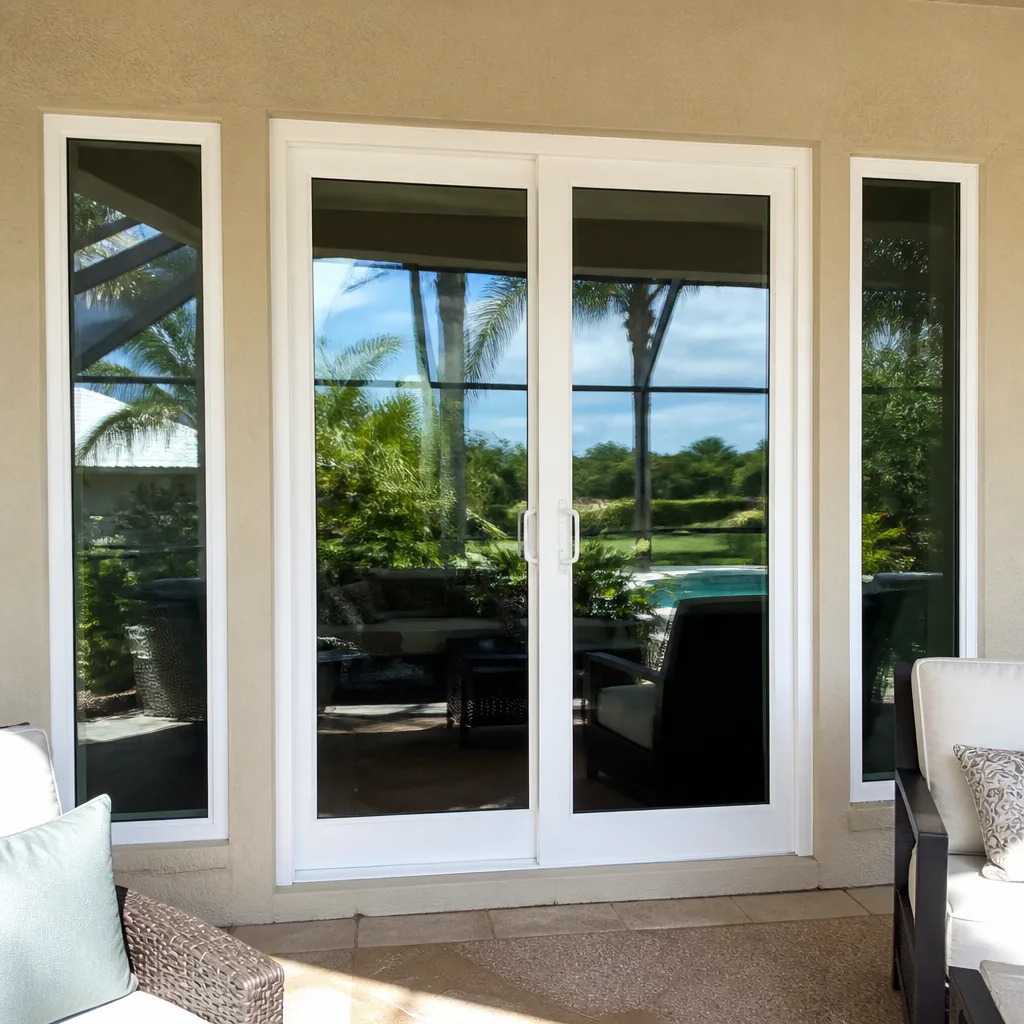 After
After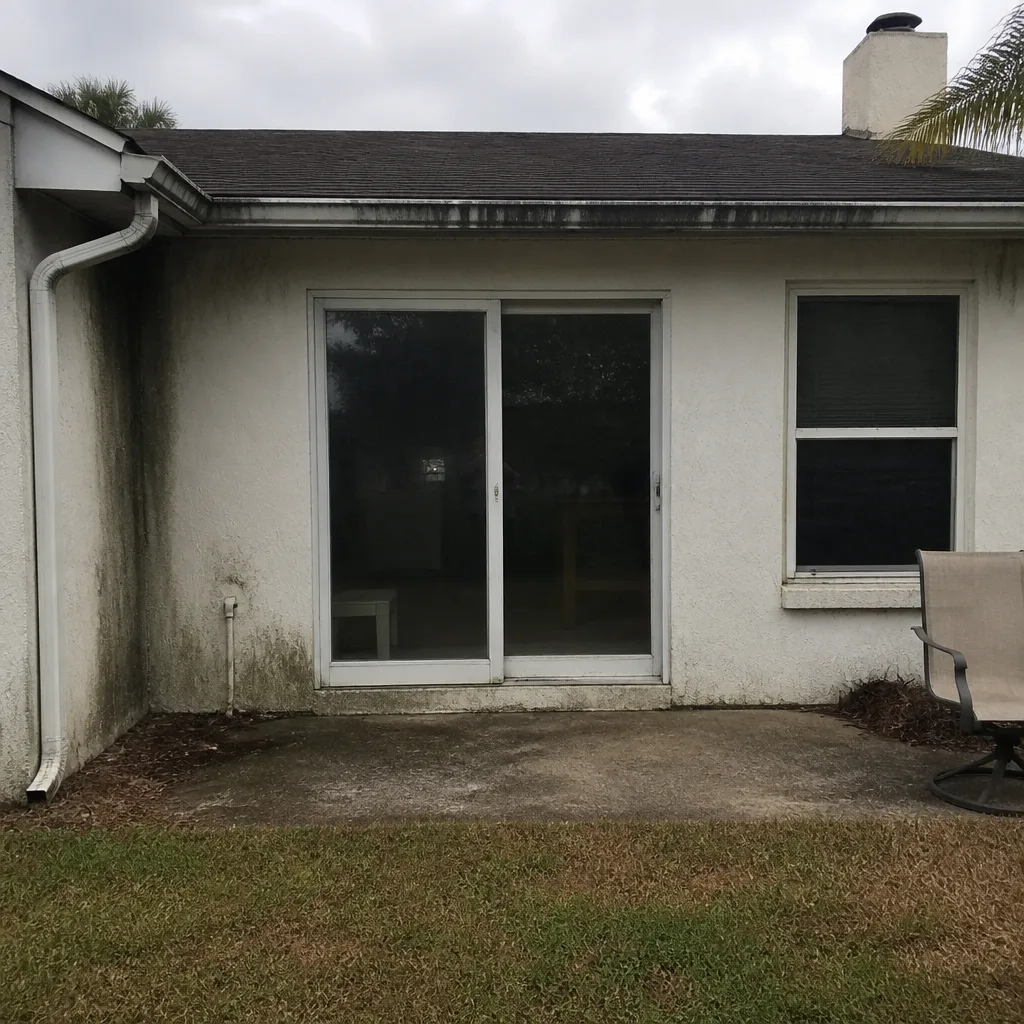 Before
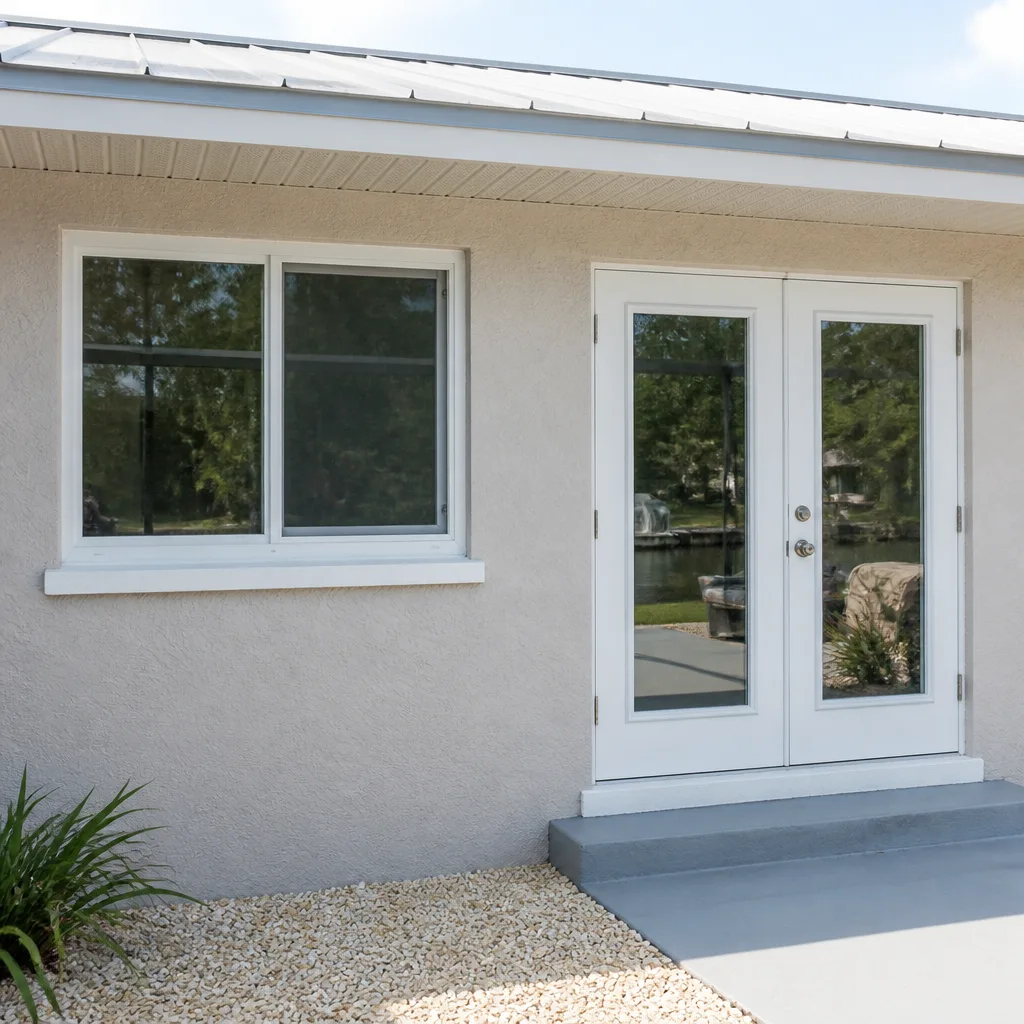 After
After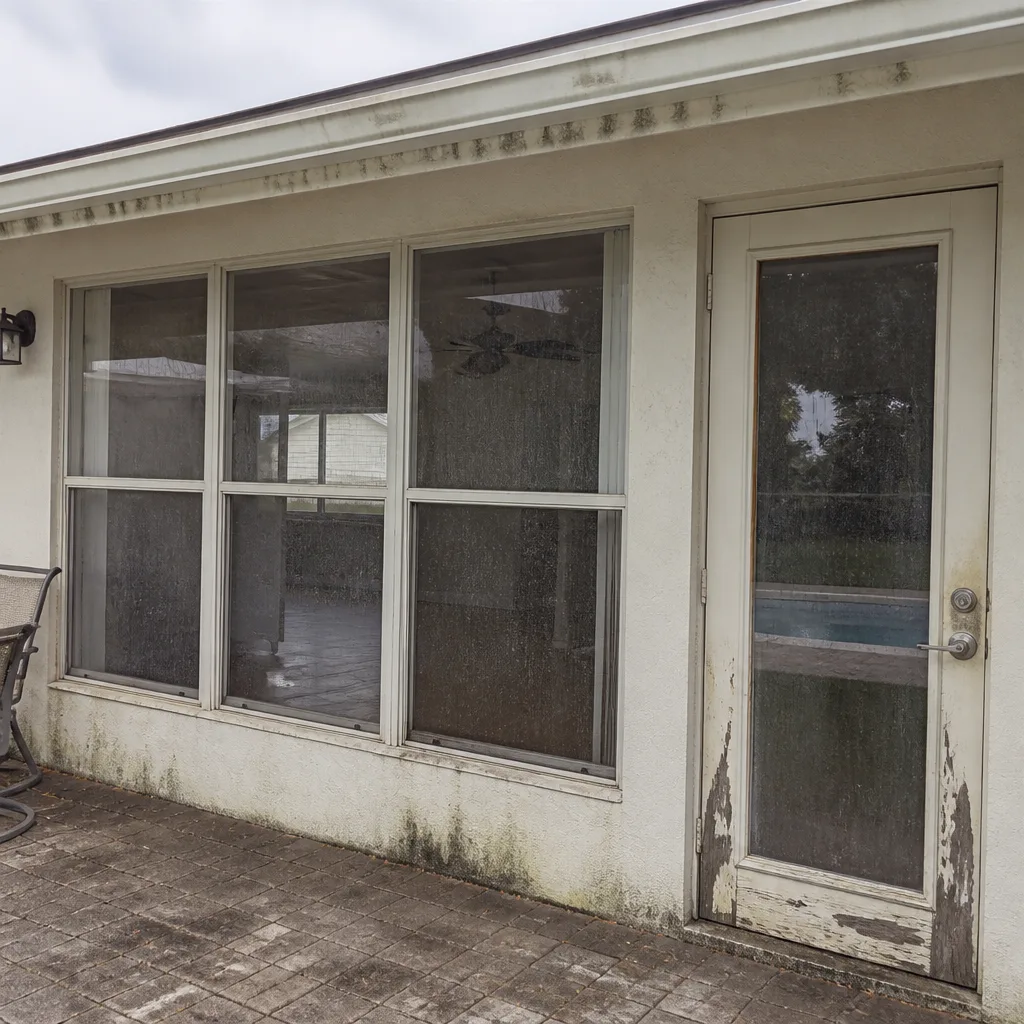 Before
 After
AfterWhat Shingle, Tile & Metal Roofing Costs in Sanibel
On Sanibel, a coastal-spec shingle roof runs $7.50-$11.00 per square foot installed. Tile roofing lands between $14.00-$19.00 per square foot depending on whether you choose concrete or clay. Standing-seam metal roofing starts around $12.00 per square foot and climbs to $20.00+ once you add marine-grade fasteners and HVHZ-rated underlayment. A typical 2,200-square-foot Sanibel home re-roof runs $18,000-$38,000 all-in, with metal at the top of that range.
For impact windows and doors, the pricing picture is just as concrete: impact windows run $800-$1,500 per window installed, a standard impact single-hung lands between $900-$1,800, and large or custom openings (a wide picture window facing the Gulf, a sliding glass wall) sit in the $2,500-$5,000 band. Whole-home impact packages on Sanibel typically fall between $8,000-$25,000+ depending on opening count and wind zone.
What moves the number in Sanibel? Opening count, floor height (a third-story opening takes different equipment and more labor than a ground-floor one), frame material, and whether the roof was originally framed for storm-rated loading or needs sistered rafters. The coastal-spec premium is real and permanent: galvanized fasteners, standard underlayment, and inland-grade flashing might shave $3,000-$5,000 off your initial quote. They will more than consume that savings in corrosion repairs and a failed inspection within five years. We’d rather give you the honest number up front. Call (239) 453-7751 for a free in-home measure and a written line-item quote. No change orders, no vague allowances, no trip charge inside our home county.
Fast, Reliable Shingle, Tile & Metal Roofing Across Sanibel
Shingle, tile, and metal roofing in Sanibel is a different trade than roofing in Fort Myers or Cape Coral. The island’s HVHZ wind zone, dual salt-air exposure from the Gulf of Mexico and Pine Island Sound, and post-Hurricane Ian rebuild standards force decisions the mainland contractor never has to make. We’re Winslow Windows & Doors, and our Shingle, Tile & Metal Roofing team has been walking Sanibel roofs long enough to know exactly which fasteners, flashings, and underlayments survive this island and which ones die young. Ed Winslow’s name is on the door, and on every roof we install. When you call (239) 453-7751, a live person answers. No voicemail loop, no call center.
Why Winslow Windows & Doors Is Sanibel’s Preferred Shingle, Tile & Metal Roofing Company
Sanibel homeowners have a right to be skeptical of roofing contractors. Too many island residents have been handed Fort Myers-rated systems that fail Sanibel inspection, or standard galvanized fasteners that rust through at the eave line within four years. We built our reputation on doing the opposite: specifying for Sanibel’s actual conditions and backing every roof with the 36500-Day Done Right Promise. If it’s not done right, we make it right. That’s a century-long standard, and it’s Ed Winslow’s personal guarantee, not a marketing slogan.
Every technician who steps onto a Sanibel roof is background-checked, uniformed, and has a published license number attached to the company. You’ll know who’s at your door before the truck pulls up. We’ve been in business since 2011, locally owned and owner-operated. Our crews serve Sanibel directly, with dispatch and scheduling coordinated from our South Florida office. When a Sanibel homeowner calls at 2 a.m. with a lifted metal panel after a squall, a live person answers. That’s not a perk. It’s how we’ve always run the business.
Standing offers apply on Sanibel, permanently: $40 off any repair over $200, a free second opinion on any written estimate from another contractor, no trip charge inside our home county, and a 10% discount for seniors and veterans. These aren’t seasonal promotions. They’re commitments.
Our Shingle, Tile & Metal Roofing Services in Sanibel
HVHZ-Rated Metal Roofing Systems
Metal roofing on Sanibel is not the same product sold in Estero. A barrier-island metal roof must carry a Miami-Dade NOA or Florida Product Approval covering the opening’s design pressure, and it must be fastened with hot-dip galvanized or stainless hardware. Standard zinc-plated fasteners start spitting rust streaks within 24 months here. The dual salt spray from the Gulf and the Sound simply eats them. We specify stainless fasteners, marine-grade washers, and sealed panel laps as standard on Sanibel. It’s the only spec that survives two decades of salt fog.
Marine-Grade Fastener and Flashing Packages
This is the page’s most important section. The way a Sanibel roof fails is rarely the field of shingles or panels. It’s the hardware. We see galvanized fasteners corrode through at the eave line within three to five years, allowing shingles or metal panels to lift in the next storm. Aluminum drip edges and valley flashings pit and dissolve from salt exposure, creating leaks even when the roof field looks intact. That’s what we find on roof after roof when we arrive after a storm. Our team specifies stainless steel or hot-dip galvanized hardware and marine-grade flashings for every Sanibel roof. It’s a line item on our written quotes, not a hidden upgrade.
Impact-Rated Underlayment Replacement
Underlayment is where mainland contractors get caught on Sanibel. Underlayment specified for the Fort Myers wind zone lacks an HVHZ large-missile rating, and it fails Sanibel inspection. Then the homeowner pays for a tear-off and a re-install before a single shingle ever sees weather. We use a Miami-Dade NOA peel-and-stick underlayment on every Sanibel job, rated for the island’s design wind speed and sealed at every seam. If you have a mainland quote that looks cheaper, ask the contractor to show you the underlayment’s Florida Product Approval for HVHZ exposure. If they can’t, that quote is worthless on Sanibel.
Full Roof Replacement After Hurricane Ian
Hurricane Ian’s September 2022 landfall destroyed or severely damaged most of Sanibel’s housing stock, turning the island into an almost entirely new-installation market. The homes we re-roof now are rarely patch jobs. They’re full replacements required as a condition of rebuild permitting. Pre-Ian Sanibel was dominated by 1960s-1980s low-rise vacation cottages, elevated stilt homes, and small condo complexes, many still carrying original structures never engineered for modern wind loads. We work with rebuild timelines, not around them. When your permit requires a roof system with a specific HVHZ rating, we pull the right permit and install the right roof the first time.
What happens when you call
- 1
A real person answersNo phone trees - you reach a local pro.
- 2
You get an upfront price rangeHonest numbers before anyone is dispatched.
- 3
A background-checked tech heads outLicensed & insured, dispatched right away.
- 4
You approve before work beginsNothing starts until you say go.
Trusted Brands We Service in Sanibel
We’re an authorized installer for PGT, CGI, and Therma-Tru among our eight premium brands, which means genuine manufacturer warranties apply on Sanibel, not gray-market product with no backer. CWS manufactures the metal roof system we’ve specified on multiple island rebuilds, including several stilt homes along Periwinkle Way. ViewLux and CGI cover impact-rated windows and doors when a Sanibel roof job also requires new openings. We don’t stock generic parts and hope they hold. We order components matched to the manufacturer’s HVHZ approval for your specific roof design, and we keep a fast turnaround on written estimates so your rebuild schedule doesn’t stall.
Common Shingle, Tile & Metal Roofing Problems We See in Sanibel Homes
- Corroded fasteners at the eave and valley line. Standard galvanized hardware rusts through within 3-5 years under Sanibel’s dual salt spray, allowing shingle tabs and metal panels to lift. We replace every old fastener with hot-dip galvanized or stainless on re-roofs.
- Underlayment rated for the wrong wind zone. Fort Myers-approved underlayment lacks a large-missile rating and fails the island’s HVHZ inspection. A homeowner pays for a tear-off and re-install. We specify Miami-Dade NOA underlayment from the first quote.
- Pitted aluminum drip edges and flashings. Salt-laden air from the Gulf and Pine Island Sound corrodes aluminum at the eaves and valleys, creating leaks even when the visible roof surface looks fine. Marine-grade stainless flashings fix this at the source.
- Tile roofs installed without HVHZ-specific nailing patterns. Concrete and clay tile roofs on Sanibel require wind-load calculations beyond the mainland standard. Missing nailing patterns and weak eave attachments cause whole tile sections to blow off in a Category 2 storm, which mainland-era homes were never engineered to survive.
Pricing for Shingle, Tile & Metal Roofing in Sanibel, FL
Expect a coastal-spec Sanibel re-roof to run 10-20% above the equivalent job in Fort Myers or Cape Coral. Here’s the line-item breakdown: marine-grade fasteners add $800-$1,500 on a typical 2,200-square-foot roof. HVHZ peel-and-stick underlayment adds $1,200-$2,500. Stainless drip edge and valley flashings add $500-$1,100. None of this is upsell. It’s the minimum allowed under Sanibel’s HVHZ requirements, and skipping any of it is a false economy that fails inspection or fails within five years. The complete coastal-spec package we quote on Sanibel includes all three line items, itemized in writing. Free in-home measure. Free written quote. Call (239) 453-7751 and we’ll send a background-checked, uniformed technician to walk your roof and give you hard numbers.
Salt Air Decides the Materials, Not the Schedule
Sanibel is a Gulf-exposed barrier island. Every permitted roof must meet HVHZ design pressures. But the harder problem isn’t wind, it’s salt. Sanibel structures receive salt-laden air from two directions simultaneously: the Gulf of Mexico to the south and Pine Island Sound to the north. Ordinary roofing hardware corrodes at rates dramatically faster than even nearby Fort Myers. We’ve pulled galvanized fasteners out of island roofs that looked like they’d been soaking in brine for a decade, and they were four years old.
Contractors accustomed to mainland wind-speed zones have repeatedly been caught installing roof systems with insufficient large-missile impact ratings that fail Sanibel inspection. The exposed barrier-island coastal exposure category pushes required design speeds significantly higher here than in Fort Myers or Cape Coral. A roof that would pass inspection 15 miles inland gets red-tagged on Sanibel. We build every Sanibel quote around the island’s actual exposure category, not the county default. The cheap spec costs more within a decade. The coastal-spec costs more up front and never fails early. We’d rather give you the honest second number.
We re-roofed a 1970s stilt home on Periwinkle Way after Hurricane Ian stripped its original shingle roof. The previous installer had used standard galvanized fasteners and a Fort Myers-rated underlayment. Within two years, the fasteners had rusted through at the eave line. Our crew specified hot-dip galvanized stainless fasteners, a Miami-Dade NOA peel-and-stick underlayment rated for HVHZ, and a CWS metal roof system with a Florida Product Approval for Sanibel’s design wind speed of 180 mph. We also replaced the corroded aluminum drip edge with a marine-grade stainless version so the salt-laden air no longer eats the roof edges. That’s the Sanibel spec. Nothing less survives here.
Florida Pays You Back
The incentives stack if you know where to look. My Safe Florida Home matching grants offer up to $10,000 for qualifying wind-mitigation upgrades, including a new impact-rated roof system. Florida’s sales-tax exemption on impact-resistant windows and doors removes the tax bite on replacement installations. The federal 25C energy credit covers 30% of product cost, up to $600 per year, on qualifying units. And after a wind-mitigation inspection (typically $75-$150), homeowners often see windstorm-premium credits averaging around 25% off the windstorm portion of their policy. We don’t guarantee what your insurer or the state will approve. Programs have their own rules and carrier decisions are final. But the combination can materially offset a Sanibel roof or window project, and we’ll point you to the right documentation.
One comparison worth understanding up front: impact windows versus hurricane shutters. Shutters mean hauling panels out of a garage, climbing a ladder in a rain band, and fumbling with wingnuts while the storm is already on top of you. Impact windows are protection that’s already in place when the evacuation order comes. No panels, no ladder, no last-minute scramble. And they count fully toward your wind-mitigation credit. We don’t sell shutters, but we’ll happily explain why permanent impact protection outperforms them. Every Sanibel rebuild we touch gets this conversation early, because the roof and the windows work together: a storm that peels a shingle roof will test every opening at the same time. We rate the whole exterior, not one part of it.
We Also Serve Cities Near Sanibel
Our crews work up and down the Lee County coast. If you’re on Fort Myers Beach, in Cape Coral, or further south in Estero, we bring the same coastal-spec materials and the same Shingle, Tile & Metal Roofing in Sanibel discipline to every job. Fort Myers is the same drive, and we know the permitting offices well. The salt and the wind zone change as you move inland, and we adjust the spec accordingly. Sanibel stays our home office for island work, but we’re on the water wherever you are.
Serving Sanibel, FL - Our Local Coverage Area
We’re based in the Sanibel area and know this community well. Use the map below to see our service coverage - if you’re nearby, we can almost certainly help.
FAQs - Shingle, Tile & Metal Roofing in Sanibel
Because it will. Sanibel’s exposed barrier-island coastal exposure category pushes required design wind speeds significantly higher than the mainland Fort Myers zone. An underlayment or metal panel system approved for Fort Myers lacks the HVHZ large-missile rating Sanibel enforcement requires. The roofer wasn’t being difficult. They were telling you the truth: the mainland spec gets red-tagged on Sanibel, and the homeowner pays for a tear-off. Our quotes always specify the Miami-Dade NOA or Florida Product Approval for your exact opening’s design pressure. Call (239) 453-7751 for a written quote that’ll pass inspection.
Standard galvanized fasteners can rust through at the eave line in 3-5 years under Sanibel’s dual salt spray from the Gulf and Pine Island Sound. We’ve pulled four-year-old fasteners that looked like they’d been in the ocean. Zinc-plated hardware lasts even less time. Hot-dip galvanized or stainless fasteners are the minimum survival spec here. It’s a $800-$1,500 line item on a typical roof, and it’s the difference between a roof that lasts 20 years and one that starts shedding shingles in a Category 1. Free second opinion on any written estimate: call (239) 453-7751.
Yes. A Cape Coral tile roof sits in a lower wind-speed zone and doesn’t face the same omnidirectional salt load. Sanibel tile roofs require an HVHZ-rated peel-and-stick underlayment with a large-missile approval and sealed seams rated for the island’s exposure category. Skip that and the underlayment fails before the tile even wears. We install a Miami-Dade NOA underlayment on every Sanibel tile job, and we show the approval document in your quote. Estimates are free: call (239) 453-7751.
Because the roof and the windows fail together in a storm. Pre-Ian Sanibel was full of 1960s-1980s stilt homes still carrying original jalousie or single-pane aluminum-frame windows never engineered for impact resistance. When a storm lifts a shingle roof, it also blows out those windows, and the water that enters through the openings is often what destroys the structure, not the roof deck itself. The rebuild permitting on Sanibel requires full window and door system replacements along with the roof. We handle both. It’s a whole-exterior job, not a roof patch. For a roof and window package quote, call (239) 453-7751.
A coastal-spec metal roof on Sanibel runs 10-20% above the inland version due to marine-grade fasteners, HVHZ underlayment, and stainless flashings. That typically adds $3,000-$5,000 on a 2,200-square-foot home. The inland version is a false economy because the galvanized hardware and standard underlayment fail within five years: rusted fasteners let panels lift, and an underlayment without a large-missile rating fails inspection before the roof ever sees weather. You pay the coastal-spec price either way. Once up front, or twice within a decade when the cheap roof fails and has to be torn off. We quote the coastal spec from day one, itemized in writing. Call (239) 453-7751 for your free estimate.
Contact Winslow Windows & Doors in Sanibel
If your Sanibel roof needs an honest assessment, a written line-item quote, or a second opinion on a mainland estimate, call (239) 453-7751. A live person answers, 24 hours a day. Ed Winslow’s name is on the door and on every roof we install. We’re the one down the road, ready when you are.
Written by Ed Winslow, Owner at Winslow Windows & Doors, serving Sanibel with coastal-spec roofing, impact windows, and exterior protection since 2011.
Six Reasons Homeowners Choose Winslow Windows & Doors
Impact systems engineered to design pressures up to +/-100, matched to your wind zone - your openings hold when the storm arrives.
Low-E insulated impact glass from our manufacturer lines commonly cuts monthly cooling bills 20-30%.
Laminated impact glass shuts out up to 40% of outside noise - traffic, neighbors, weather.
Monitoring services run $30-90 a month. Laminated impact glass resists forced entry around the clock, with no subscription.
Florida homeowners average around 25% savings on the windstorm portion of their policy after protecting every opening - some homes qualify for more.
A full impact package upgrades curb appeal, buyer confidence and appraised value in one project.